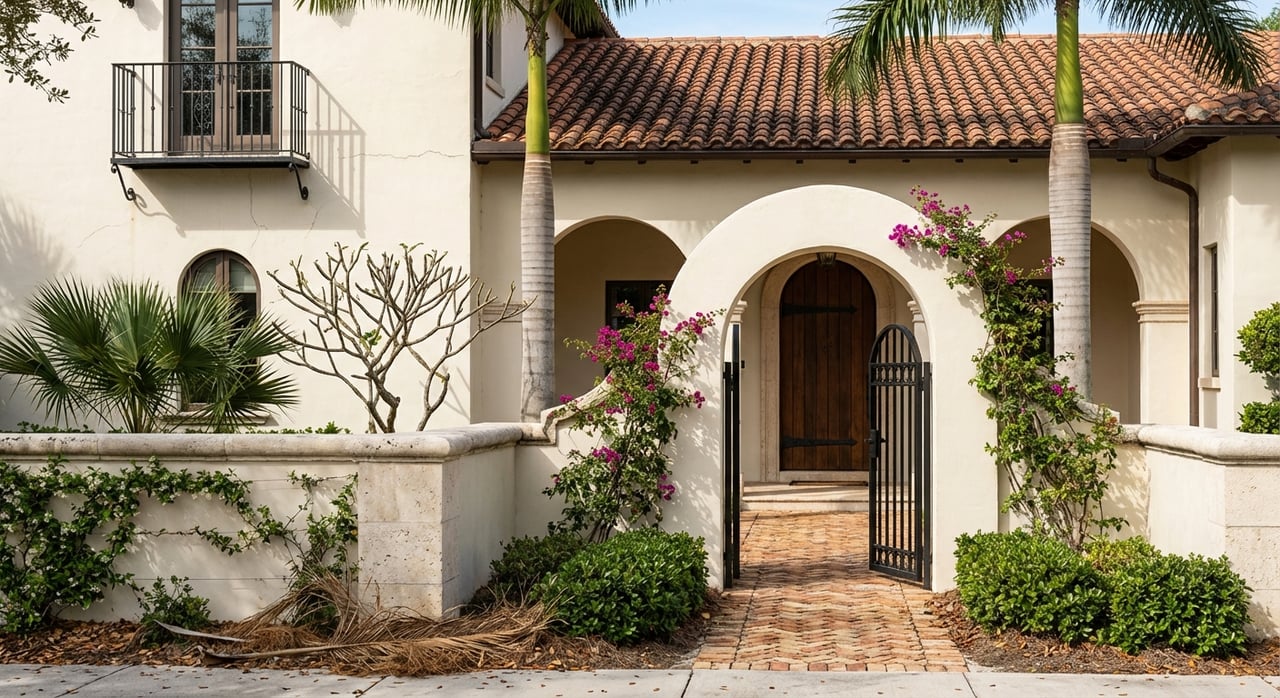
Imagine stepping through a wrought‑iron gate into a sunlit courtyard, where a tiled fountain bubbles and palms cast shifting shadows on stucco walls. If you love that sense of romance and craft, Mediterranean Revival homes in Coral Gables deliver it in everyday living. In this guide, you’ll learn how to recognize the style, where to see the best local examples, and what to know about permits, renovations, and incentives before you buy or sell. Let’s dive in.
What makes Mediterranean Revival unique
Hallmarks you can spot fast
- Stucco walls with smooth or textured finishes.
- Low‑pitched red clay tile roofs with hipped or gabled forms.
- Arched doors, windows, and shaded arcades.
- Courtyards, loggias, and colonnades that link indoor and outdoor rooms.
- Decorative tile at entries and stair risers, carved stone surrounds, and wrought‑iron balconies and grilles.
- Towers or campanile elements that mark entries or corners.
These traits are consistent with national style guidance and field references for Mediterranean and Spanish‑influenced architecture. For deeper identification help, review the National Park Service’s preservation topics and briefs, which outline defining features and appropriate treatments for historic materials and assemblies. You can start with the NPS overview on preservation topics for context on style and materials here.
Built for South Florida living
Mediterranean Revival in Coral Gables favors asymmetrical or U‑shaped plans that create calm courtyards and shaded outdoor rooms. Broad overhangs, arcades, and thick masonry help temper heat, while cross‑ventilation and shaded openings make daily life more comfortable. The result is a home that feels both romantic and practical in a subtropical climate.
Coral Gables’ City Beautiful heritage
George Merrick’s vision
Coral Gables took shape in the 1920s as a planned community led by George E. Merrick, inspired by the City Beautiful movement’s focus on civic grandeur and cohesive design. Wide, tree‑lined boulevards, monumental entrances, plazas, and curated public buildings created a unified Mediterranean look that still defines the city. For a succinct history of this vision, see the Preserve America profile of Coral Gables here.
The city later adopted a local historic preservation ordinance and runs an active program that oversees landmark designation, Certificates of Appropriateness, and incentives. If you own or are considering a designated property, your first stop should be the city’s Historic Preservation Program pages here.
Iconic landmarks to know
- Biltmore Hotel. Opened in 1926, the Biltmore’s soaring tower, cloistered courtyards, and arcades make it the stylistic centerpiece of Coral Gables. Explore its cultural landscape summary here.
- Venetian Pool. Created in 1924 from a local limestone quarry, this Venetian‑inspired public pool features rock outcrops, loggias, and bridges, and is listed on the National Register. Read the city’s history page here.
- Coral Gables City Hall and Douglas Entrance. City Hall’s limestone, tile roof, loggias, and clock tower anchor the civic core near Miracle Mile, while the Douglas Entrance serves as a monumental gateway to the city’s original approach.
Miracle Mile and Mediterranean streetscapes
Mediterranean motifs extend into Coral Gables’ shopping blocks. Along Miracle Mile and Alhambra Circle, you’ll see tiled accents, ornamental ironwork, arcades, and intimate courtyards that make the streets pedestrian‑friendly and garden‑centered. Restored landmarks like La Palma and the Colonnade illustrate how this design language endures in daily life. For a local perspective on preservation wins, see this overview from Coral Gables Magazine here.
Estates, villas, and the “villages”
Residential architecture ranges from grand estates to intimate villas, often with inward‑facing courtyards, loggias, arcaded entries, and patterned ceramic details. Many early homes integrate locally quarried oolitic limestone for walls and garden features, which contributes to the area’s signature texture.
Merrick also planned themed “villages” to bring variety while staying rooted in Old‑World precedents. Seven were completed, including the Italian Village, French Normandy, Dutch South African, Chinese, and Florida Pioneer clusters. They remain among Coral Gables’ most distinctive residential enclaves. Explore a concise overview of these historic sites here.
Buying a Mediterranean Revival home
What to look for during showings
- Roofs. Clay tile roofs can last decades if properly maintained. Pay close attention to ridges, flashings, and underlayment near end‑of‑life.
- Stucco and masonry. Hairline cracks and moisture staining are common in humid climates. Check for recent, compatible repairs rather than impermeable coatings.
- Windows and doors. Original wood or steel units may be character‑defining. In Miami‑Dade’s High‑Velocity Hurricane Zone, many openings require approved impact protection.
- Ironwork and wood. Look for signs of corrosion on iron grilles and gates, and check timber elements for rot or termite activity.
- Courtyards and site walls. Inspect fountains, drains, and garden walls, especially where coral rock or tile details meet grade.
For repair strategies that protect historic character, the National Park Service’s Preservation Briefs provide homeowner‑friendly guidance on roofs, stucco, and windows. Browse the full collection here.
Questions to ask the seller and the city
- Is the property locally designated or in a historic district? Request any prior Certificates of Appropriateness and permits.
- What recent work involved the roof, windows, or doors? Ask for product approvals for replacements and contractor warranties.
- Are there open permits or pending code items? Confirm status before closing.
In Coral Gables, designated properties and many exterior changes visible from public ways require a Certificate of Appropriateness. Start with the city’s Historic Preservation Program pages for current rules, applications, and incentives here. For Miami‑Dade product approvals used in hurricane zones, review the county’s Notices of Acceptance portal here.
Insurance and HVHZ code basics
Coral Gables lies within Florida’s High‑Velocity Hurricane Zone. Expect stricter requirements for windows, doors, and some roofing systems. Many replacements must carry Florida Product Approval or Miami‑Dade NOA. Coordinate code compliance with historic review early in your planning. For background on HVHZ standards, see the Florida Building Commission resource here.
Selling a Mediterranean Revival home
Pre‑listing prep that pays off
- Gather documentation. Compile historic photos, original plans, previous COAs, and warranty information.
- Get a focused inspection. Ask your inspector to assess roof flashings, stucco, windows, and drainage around courtyards.
- Service the details. Refresh corroded ironwork finishes, tune door and window hardware, and test fountains and lighting.
- Clarify designation and permits. Be ready to discuss any historic status and recent permitted work with serious buyers.
Marketing what makes it special
Luxury buyers respond to authenticity, craftsmanship, and lifestyle. Spotlight courtyards, loggias, natural light, and indoor‑outdoor rooms. Call out provenance, architect names where known, and compatible updates that respect original materials. High‑quality photography should linger on textures like hand‑troweled stucco, clay tile, carved stone, and patterned ceramics.
Renovation and preservation essentials
COA review in Coral Gables
Renovations that alter a designated home’s exterior or any work visible from public ways typically require a Certificate of Appropriateness. Routine maintenance may be handled administratively. The city follows the Secretary of the Interior’s Standards in many reviews and offers local ad‑valorem tax incentives for qualifying rehabilitations. Get current forms, standards, and incentive details from the city’s Historic Preservation Program pages here.
Windows and storm protection
In the HVHZ, you usually need impact‑rated protection at openings. For historic homes, repair of original sashes combined with interior storm panels or sympathetic impact systems can preserve character while meeting safety goals. Always coordinate early with historic staff and confirm approved products using Miami‑Dade NOAs.
Roofs and stucco
Clay tile systems are long‑lived but need proper underlayment and flashing work. Stucco needs compatible repairs that allow walls to breathe. The NPS Preservation Briefs offer step‑by‑step best practices for roofing, stucco, and masonry repairs to avoid moisture traps and visual mismatches. Explore the briefs library here.
Tax incentives at a glance
- Federal Historic Rehabilitation Tax Credit. A 20 percent federal income‑tax credit is available for certified rehabilitations of income‑producing historic buildings that meet the Secretary of the Interior’s Standards. Owner‑occupied single‑family homes do not qualify. Read the NPS primer here.
- Local incentives in Coral Gables. The city offers ad‑valorem exemptions for qualifying historic rehabilitations under local rules. Consult the Historic Preservation Program pages for eligibility, covenants, and application steps here.
A quick self‑guided tour
- Start at the Biltmore Hotel on Anastasia Avenue for the quintessential tower, arcades, and landscaped courts. Background reading is available here.
- Walk or drive Miracle Mile and Alhambra Circle to see courtyards, ironwork, and restored commercial facades. A preservation overview is summarized here.
- Stop by City Hall on Biltmore Way to appreciate formal civic proportions, then visit the Venetian Pool for a unique fusion of local stone and Mediterranean imagery. Read about the pool’s history here.
- If time permits, end in the Italian Village to experience one of the most intact themed residential clusters. See a citywide list of historic sites here. Always check hours, access rules, and privacy guidelines before visiting.
Work with a local expert
If you are drawn to Coral Gables’ Mediterranean Revival homes, you deserve an advisor who understands both design integrity and market value. From pre‑listing strategy and bespoke presentation to buyer due diligence, permits, and product approvals, you will benefit from precise guidance and white‑glove execution. For a confidential conversation or a complimentary valuation, connect with Jelena Khurana.
FAQs
What defines Mediterranean Revival in Coral Gables?
- Look for stucco walls, red clay tile roofs, arches, courtyards, loggias, wrought iron, and focused ornament around entries and windows. Many homes also feature towers and patterned tile details.
Does historic designation stop me from renovating?
- No. Coral Gables allows alterations, but exterior work visible from public ways usually needs a Certificate of Appropriateness. Planning early with city staff helps align design, code, and timelines.
Do I need impact windows for a historic home?
- In the HVHZ, openings generally need approved impact protection. For historic windows, repair paired with interior storm panels or historically sympathetic impact systems is often preferred by reviewers.
Are Mediterranean Revival homes costly to maintain?
- They can require specialized skills for clay tile roofing, stucco, and ironwork. Many owners find that proper maintenance preserves value, and local incentives may offset qualified rehabilitation costs.
How can I see top examples in one afternoon?
- Visit the Biltmore Hotel, walk Miracle Mile and Alhambra Circle, stop at City Hall, and tour the Venetian Pool. If time allows, drive through the Italian Village. Confirm open hours and access rules in advance.