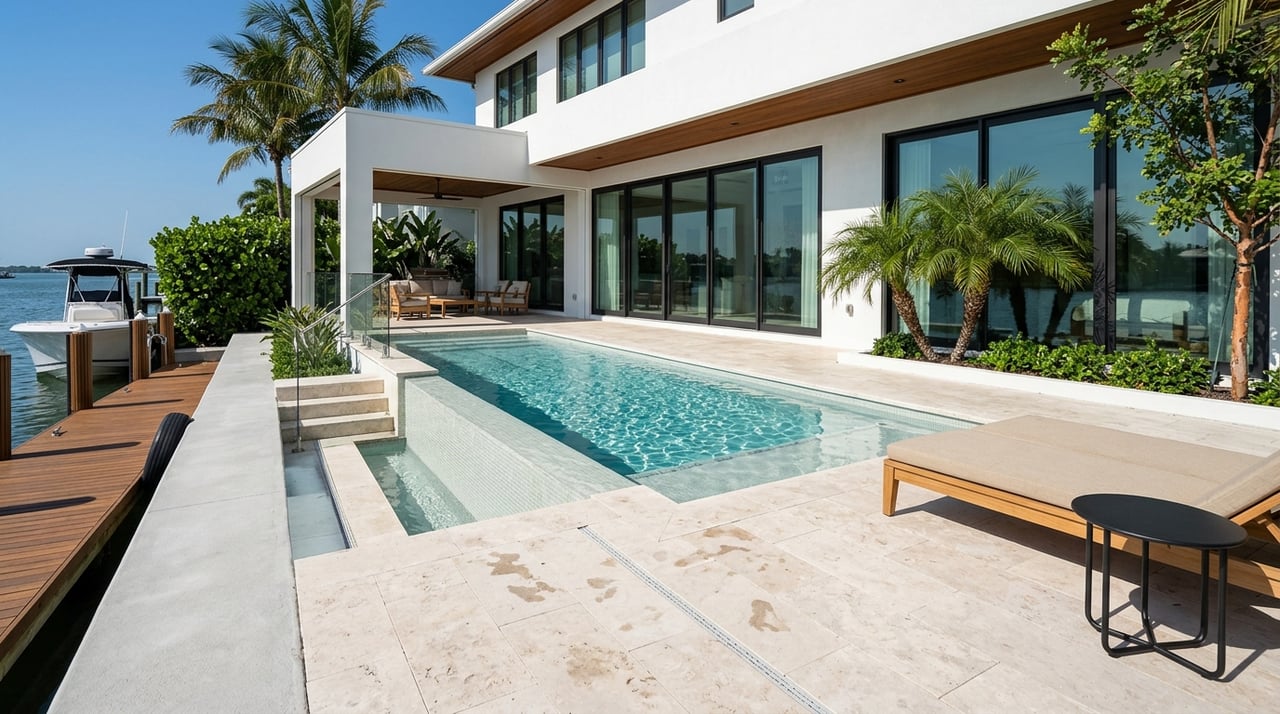
Dreaming of a home that feels tucked away from the city, yet still connected to everything Miami offers? Miami Beach’s private and semi-private island communities attract buyers for exactly that reason: they pair waterfront living, controlled access in many cases, and a distinct sense of arrival. If you are exploring where each island fits your lifestyle, this guide will help you understand the differences in access, home types, and day-to-day convenience. Let’s dive in.
What “private island” means here
In Miami Beach, “private island” can mean very different things depending on the community. Some islands are fully club-style or access-restricted in practice, while others are better described as guarded or controlled-entry residential enclaves. A few are simply bridge-linked waterfront neighborhoods with a strong island identity.
That distinction matters when you are comparing value, privacy, and ease of movement. According to the Palm, Hibiscus, and Star Islands Association, Miami Beach island communities are best viewed as a spectrum rather than one single category.
Fisher Island: the most complete private-island lifestyle
If you want the clearest example of true private-island living, Fisher Island stands apart. The island is accessible only by ferryboat or private yacht, and the Fisher Island Club transportation overview notes 24-hour ferry service from Terminal Island Road off the MacArthur Causeway.
Fisher Island spans about 216 acres and includes roughly 800 residences. The club describes two deep-water marinas, a private beach club, golf, tennis, spa, dining, a kids’ club, and on-island services such as a medical clinic and school. In practical terms, this is less like a typical neighborhood and more like a self-contained luxury residential club community.
For buyers, that means the lifestyle is highly curated and intentionally separate from the mainland pace. For sellers, it also means your property is often evaluated within the context of a larger membership and amenity-driven environment.
Palm, Hibiscus, and Star Islands
Palm, Hibiscus, and Star Islands are among the best-known island addresses in Miami Beach. The community association describes them as a private community floating between Downtown Miami and South Beach, with history dating back to land reclamation in 1922.
These islands are strongly associated with detached residential living. City records referenced in the research repeatedly point to single-family homes across Star, Palm, and Hibiscus addresses, which supports their reputation as estate-oriented island neighborhoods.
What makes this cluster especially appealing is the mix of privacy and neighborhood function. Miami Beach operates Palm Island Park, Hibiscus Island Park, and Buoy Park on Star Island, giving residents access to usable open space within the islands themselves.
Who these islands may suit
These islands often appeal to buyers who want a central location between Miami and Miami Beach, along with a recognizable waterfront address. You may also find them compelling if your priority is a single-family home setting rather than a condo-heavy environment.
Sunset Islands I-IV
Sunset Islands I through IV offer a controlled-access feel with a more residential, understated identity. According to the City of Miami Beach neighborhood association registry, Sunset Islands I & II and III & IV have owner-only membership associations.
A city capital-improvement report describes Sunset Islands Nos. 1 through 4 as being west of Lower North Bay Road and made up of single-family residences. The same report notes entrance features and gate structures at both the north and south thoroughfares, which helps explain why many people perceive the enclave as gated, even though the internal roads are public.
For buyers, Sunset Islands often represent a balance between privacy and mainland convenience. For property owners, infrastructure is also a current topic: the city is upgrading water and sewer systems in Sunset Islands II and III, with the project scheduled to finish in May 2026.
Why access matters here
On islands like Sunset, the feel of arrival can be just as important as the lot itself. Gate structures, limited through traffic, and a single-family layout all shape the day-to-day experience, even when the legal structure is not the same as a fully private island.
Venetian Islands
The Venetian Islands are different from the more access-controlled enclaves. They function as a bridge-linked waterfront neighborhood connected by the Venetian Causeway, which creates a more integrated relationship with both Miami and Miami Beach.
The City of Miami Beach neighborhood association page notes that the Venetian Islands Homeowners Association represents Rivo Alto, Di Lido, and San Marino, along with the portion of the Venetian Causeway within those islands. City appraisal and zoning materials cited in the research show single-family lots and single-family residential zoning on Rivo Alto and Di Lido, reinforcing the area’s estate-style character.
The tradeoff is that mobility and infrastructure are part of the ownership conversation. The Miami-Dade causeways page confirms that the Venetian Causeway toll plaza remains in place, cash is not accepted, and property-owner and commuter plans are available. The county is also replacing the aging bridges, with design work expected to finish in summer 2026.
Venetian Islands at a glance
| Feature | What to know |
|---|---|
| Access | Via the Venetian Causeway |
| Setting | Bridge-linked waterfront neighborhood |
| Typical homes | Predominantly single-family in key islands like Rivo Alto and Di Lido |
| Key consideration | Toll access and ongoing bridge replacement work |
La Gorce Island, Allison Island, and Biscayne Point
These north-end and mid-beach islands are important to understand because they do not all fit the same mold. Each has its own blend of access, housing type, and municipal structure.
La Gorce Island is best described as a guarded residential island. A City of Miami Beach document states that it consists primarily of single-family residences and has a guardhouse at the entrance, while also noting that its internal streets are public ways.
Allison Island has a more mixed profile. The research notes a split between the north island and the Aqua Allison Island area south of 63 Street, where the city association list includes condo sub-associations and an Aqua Island Homes Association.
Biscayne Point is another island to keep on your radar. City records describe it as mostly single-family homes, and the neighborhood association places it west of 77th Street and Hawthorne Avenue. The city also lists Biscayne Point as a special taxing district, a detail that signals a dedicated maintenance framework.
Typical homes and architecture
Across most of Miami Beach’s prime island communities, the dominant pattern is detached single-family living on bayfront or canalfront lots. That is especially true on Sunset Islands, La Gorce Island, the Venetian Islands, Palm, Hibiscus, Star, and Biscayne Point.
The city preservation materials cited in the research show that architecture is not one-note. For example, 42 Star Island is described as a 1925 single-family residence in Mediterranean Revival style, while areas such as Aqua Allison Island introduce a more contemporary mix of condominiums and homes.
Fisher Island is the major outlier. Based on its acreage and residence count, it functions more like a dense luxury club-residential campus than a traditional estate-lot island.
Boating and daily convenience
Boating shapes the appeal of nearly every Miami Beach island community. Fisher Island includes two deep-water marinas and yacht access, according to the Fisher Island Club marina page. On other islands, bay access, canal frontage, and dockage can play a major role in how you compare properties.
But daily convenience matters too. Access routes, toll patterns, and transportation alternatives all affect how island living feels on a normal weekday, not just on a sunny weekend.
One helpful update is the Miami-Dade causeways information page, which notes that Miami Beach launched a free commuter water taxi in January 2026 between Maurice Gibb Memorial Park in Sunset Harbour and the Venetian Marina/Sea Isle Marina in Miami. The city says the ride takes about 20 minutes and can help riders avoid bridge-opening delays.
What buyers should evaluate before choosing an island
When you compare Miami Beach private island communities, it helps to look beyond prestige alone. A smart evaluation usually includes:
- Access style: ferry, guarded entrance, causeway, or open bridge connection
- Home type: single-family estate setting versus a mixed residential or club-style environment
- Mobility: tolls, bridge routes, commute patterns, and alternate transit options
- Infrastructure: current or planned bridge, water, sewer, and stormwater improvements
- Lifestyle fit: boating priorities, privacy preferences, and proximity to Miami or Miami Beach destinations
The City of Miami Beach facilities division lists Allison Island and Biscayne Point among its special taxing districts, while the city is also advancing infrastructure work on Sunset Islands and elsewhere. That makes resilience and maintenance part of the long-term ownership picture.
Why island expertise matters
In Miami Beach, two properties can both be called “island homes” and still offer very different ownership experiences. One may revolve around ferry access and club amenities, while another may depend on a causeway commute, a guardhouse entry, or a city-led infrastructure project nearby.
That is why local, hyper-specific guidance matters when you are buying or selling in these enclaves. Understanding the details behind access, zoning patterns, neighborhood structure, and buyer perception can directly shape your strategy and timing.
If you are considering a move, a purchase, or a sale in Miami Beach’s island communities, working with a specialist can help you evaluate the right fit and position your property thoughtfully. To explore your options with a tailored, high-touch approach, connect with Jelena Khurana.
FAQs
What is the most private island community in Miami Beach?
- Fisher Island is the clearest example of a true private-island community because access is limited to ferryboat or private yacht, according to the Fisher Island Club.
Are the Venetian Islands considered private islands in Miami Beach?
- The Venetian Islands are better described as a bridge-linked waterfront neighborhood connected by the Venetian Causeway rather than a fully private island enclave.
What kinds of homes are common in Miami Beach island communities?
- Most prime island communities in Miami Beach are dominated by detached single-family homes, although Allison Island includes a more mixed pattern with both homes and condominium components.
Does Miami Beach have island communities with guarded entrances?
- Yes. La Gorce Island has a guardhouse entrance, and Sunset Islands are often perceived as controlled-access due to their gate structures and entrance features.
What transportation issues should buyers consider in Miami Beach island neighborhoods?
- Buyers should review toll access, bridge routes, ferry or yacht-only access where applicable, and ongoing infrastructure projects such as the Venetian Causeway bridge replacement and Sunset Islands utility upgrades.